Growing Beans - climbing, also Pole beans, Runner beans, Scarlet Runners

Phaseolus vulgaris, Phaseolus coccineus : Fabaceae / the pea or legume family

Jan F M A M J J A S O N Dec
        P              

(Best months for growing Beans - climbing in USA - Zone 5a regions)

  • P = Sow seed
  • Easy to grow. Sow in garden. Sow seed at a depth approximately three times the diameter of the seed. Best planted at soil temperatures between 61°F and 86°F. (Show °C/cm)
  • Space plants: 4 - 8 inches apart
  • Harvest in 9-11 weeks.
  • Compatible with (can grow beside): Sweetcorn, spinach, lettuce, summer savory, dill, carrots, brassicas, beets, radish, strawberry, cucumbers, zucchini, tagates minuta (wild marigold)
  • Avoid growing close to: Alliums (Chives, leek, garlic, onions), Florence fennel
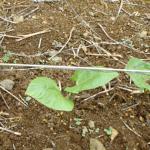
  • A few young Scarlet Runners
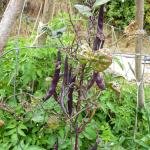
  • Purple climbing beans

Grow beans up fences, trellis, sweet corn, trees. Almost anywhere can be 'vertically productive'.

Keep well watered and pick regularly to encourage new flowers. Watch out for snails, as they will eat through the stems near ground level, and will completely eat newly sprouted beans. If you have nice new beans plants one day, and none the next, then it is probably slugs or snails.

Culinary hints - cooking and eating Beans - climbing

Use young in salads - blanch and cool. Will freeze well.

Your comments and tips

09 Dec 25, Michael (Australia - sub-tropical climate)
I live in a Brisbane outer suburb, back in september i planted dwarf beans, despite good water and fertiliser they havent grown. I should be harvesting by now shouldnt I?
08 Dec 25, Tom (Australia - temperate climate)
What is the best companion for sweet corn
19 Jan 26, Celeste Archer (Canada - Zone 5a Temperate Warm Summer climate)
In addition to my reply below - I should mention - you can plant more than one corn plant on a mound ( and probably should). IT DEPENDS on how big your mound is...three might be good...5 might be better. If you planted them in a circle spacing is less of a concern (than when in rows), because the roots can spread away from the circle, and being on a mound sunlight tends to be good.
18 Jan 26, Celeste Archer (Canada - Zone 8a Mild Temperate climate)
Since I'm from North America, my answer is a "canned/typical" answer. MANY people use the 3 sisters planting here -- -- The "Three Sisters" planting method is a traditional Indigenous companion planting technique using corn, beans, and squash together in clusters. Today’s gardeners will want to keep in mind that Indigenous cultivators who originated Three Sisters farming would have been growing dent, flint, or flour corn rather than sweet corn. The corn stalks serve as a living trellis for their sister beans. Although you can grow sweet corn as a substitute for the flint type, avoid popcorn. The stalks of these plants are short enough that they might be overwhelmed by the other plants. Don’t attempt to substitute bush beans for the pole type, as the former won’t climb. You can choose whichever type of squash or pumpkin suits your fancy for this sister planting. Keep in mind that summer squashes tend to grow more bushy than vine-like, so they don’t make the best groundcover. In addition to the Three Sisters, you may also want to sow other tall plants, like sunflower, Jerusalem artichoke, or amaranth, in the spaces between the hills. There, squash vines will provide groundcover for them. In addition to attracting pollinators, these extra plants can produce a crop, too. Sow them at the same time you sow the corn to give them a head start on the squash vines. This planting creates a symbiotic system where corn provides a stalk for beans to climb, beans add nitrogen to the soil, and squash covers the ground to retain moisture and suppress weeds, offering a balanced, sustainable food source. The sequence involves planting corn first, then beans a few weeks later, and squash after the beans have started to grow, ensuring each plant supports the others as they mature. Plant the corn and beans on a mound -- and the squash around the mound -- plant the additional plants (if desired) between the mounds (sunflower, Jerusalem artichoke, or amaranth, or other tall plant). So in your case : 1. build your mounds & plant your SWEET corn in the middle of the mound (also plant the additional plants between the mound if desired - don't forget the boron for the corn), give it a couple of weeks, then 2. plant your POLE beans (or Green bean, string bean, snap bean), once the beans are going, 3. plant your WINTER squash around the mound. IF YOU ARE IN A VERY ARID AREA -- mounds dry out quickly, so you'll need to water MORE OR skip mounding and plant this formation flat.
02 Jan 26, (Australia - sub-tropical climate)
Corn should be planted about 150mm apart in rows about 500-600mm apart. Corn grows to 1.2-1.8m high so will shade most other plants most of the day. Also it is best to hill the soil up around the plants when about 400-500mm high. This would disturb other plants growing in the inter-row.
20 Jun 25, Jessica (USA - Zone 9a climate)
My pole beans look amazing but they are not flowering. Any ideas? Am I just being impatient? Thanks in advance!
25 Jun 25, (USA - Zone 4a climate)
By about 1-1.2m high you should be having flowers.
18 May 24, Celeste Archer (Canada - Zone 5a Temperate Warm Summer climate)
In addition: Where large amounts of farmyard manure have been used, molybdenum deficiency is less likely.
18 May 24, Celeste Archer (Canada - Zone 8a Mild Temperate climate)
I think everyone knows beans need Mycorrhizal fungi to grow well -- Mycorrhizal fungal filaments in the soil are truly extensions of root systems and are more effective in nutrient and water absorption than the roots themselves. More than 95 percent of terrestrial plant species form a symbiotic relationship with beneficial mycorrhizal fungi. Forest floor duff contains MF and can be easily added to your compost bin, or directly in the desired areas. ADDITIONALLY - beans need Molybdenum (compost banana peels are a good source of Molybdenum). Molybdenum-bearing enzymes are by far the most common bacterial catalysts for breaking the chemical bond in atmospheric molecular nitrogen in the process of biological nitrogen fixation. - In legumes such as clovers, lucerne, beans and peas, molybdenum serves two functions. The plant needs it to break down any nitrates taken up from the soil—in the same way as non-legumes use molybdenum. And it helps in the fixation of atmospheric nitrogen by the root nodule bacteria. Legumes need more molybdenum to fix nitrogen than to utilise nitrates. --- The take away --- don't forget the forest floor duff and banana peels around your beans.
25 Aug 23, Jan (Australia - sub-tropical climate)
Why do my beans, be they climbing or bush, always develop rust on the leaves. Once the climbers reach about 30cm they develop brown spots on underside and if left the rust becomes very powdery and the leaves become distorted. I cut these leaves off and put in the bin. This happens to any bean seeds I plant and happens no matter what bin I plant them in. I might add I do get a good lot of beans, they do not seem to be affected (I do think I could have a longer growing season if the rust was not there) and so far the rust has not affected any other vegetables. Could there be something in the soil that causes this rust and what can I do about it. I do make my own compost and fertilise the soil before planting.
Showing 1 - 10 of 268 comments

I have started to get the same problem with our blue lake beans, beautiful and now not so much. My general feeling is not enough even watering. I use tech line and we've had very little rain. When we had the rain they were perfect.

- G'Day Farm

Please provide your email address if you are hoping for a reply


All comments are reviewed before displaying on the site, so your posting will not appear immediately

Gardenate App

Put Gardenate in your pocket. Get our app for iPhone, iPad or Android to add your own plants and record your plantings and harvests

Planting Reminders

Join 60,000+ gardeners who already use Gardenate and subscribe to the free Gardenate planting reminders email newsletter.


Home | Vegetables and herbs to plant | Climate zones | About Gardenate | Contact us | Privacy Policy

This planting guide is a general reference intended for home gardeners. We recommend that you take into account your local conditions in making planting decisions. Gardenate is not a farming or commercial advisory service. For specific advice, please contact your local plant suppliers, gardening groups, or agricultural department. The information on this site is presented in good faith, but we take no responsibility as to the accuracy of the information provided.
We cannot help if you are overrun by giant slugs.